
Written by Martina Đođo — July 2026
AI is moving faster than any technology shift we've worked through. New models, new tools, new claims — every week. The temptation is to either chase everything or to ignore it all and hope the dust settles. We don't do either. Instead, we've built a way of working that lets us absorb change quickly without compromising on the engineering discipline our clients depend on.
We read. A lot.
The first defence against hype is being well-informed. Engineers across the company read papers, blog posts, model release notes, and technical writeups — and share what's actually useful. Reading is part of the job, not a side activity. It's how we tell signal from noise before it lands in production decisions.
We have real discussions
Not channels full of links — actual conversations. About what's working, what's not, what's overhyped, what's actually production-ready. These discussions happen across teams, not just within the AI specialists. The questions get sharper because the perspectives are different.
Knowledge-sharing workshops
We started workshops early — and they're open to everyone, especially colleagues working remotely. Hands-on sessions where someone walks through a technique, a tool, a workflow. Questions are encouraged. Mistakes are encouraged. The goal isn't to make everyone an AI expert; it's to make sure nobody's left behind as the field moves.
We give people access to AI tools
You can't form a real opinion about something you can't use. Engineers get access to the tools that matter — and the time to actually try them on real problems. No artificial gatekeeping, no “wait until it's approved.” The trust comes with responsibility, but it starts with access.
We encourage responsibility
Access without responsibility is a fast way to break things. Engineers are expected to understand what AI is producing, why, and where it might be wrong. Accountability for output stays with the engineer — the model is a tool, not a co-author who shares the blame. That mindset shapes how every output gets reviewed.
We build our own tooling to keep quality high
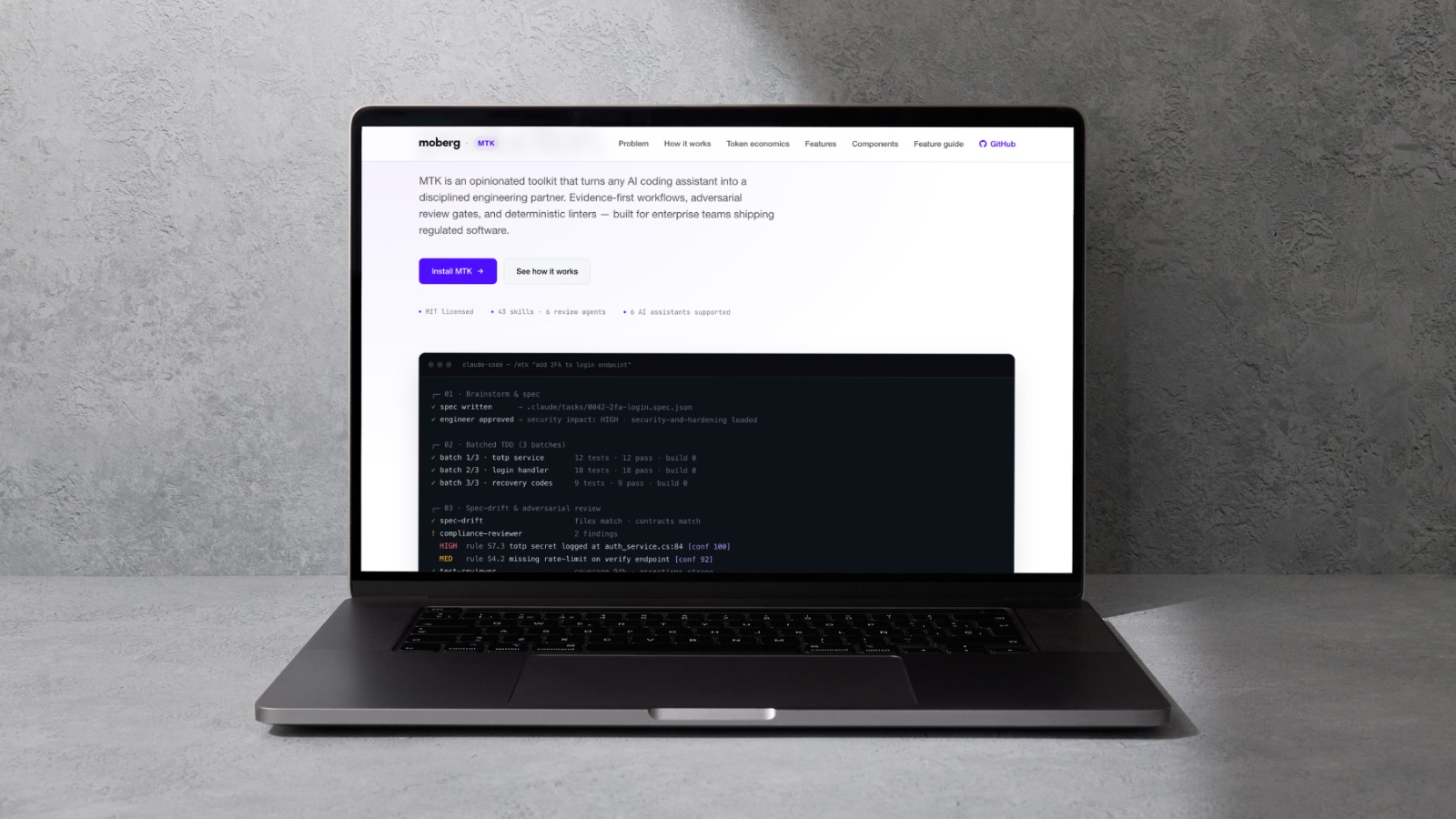
Generic AI tools follow your guidelines about 80% of the time. The remaining 20% is where production bugs come from. So we built our own harnessing — spec-driven workflows, automated review gates, structured findings, and audit trails — to close that gap.
The result is AI-assisted development that meets the bar regulated industries require: traceable, testable, and consistent across every PR.
We set internal rules
When the technology moves fast, the rules need to be clear and few. We have guidelines for what AI can be used for, what it can't, what client data may go where, how outputs are reviewed, and how decisions are documented. Not because we don't trust people — but because clear rules let people move quickly with confidence.
The rules evolve. As the technology changes, so do they.
And probably most importantly — we stay calm
The pace is real. The pressure is real. But the work hasn't fundamentally changed. We still have to understand the problem, design something that holds up, ship it, and stand behind it. AI changes some of the tools we use along the way. It doesn't change the standard.